Natural Line Working Method – guided by gentle cues
Most workspaces evolve from habit rather than intention. Objects drift, routines settle, and movements trace patterns across the desk that often go unnoticed. The Natural Line Working Method takes these quiet tendencies and treats them as the foundation for a calmer, more coherent working environment. Instead of enforcing order, it follows the lines already present in the way you work: the path of your arm from keyboard to notebook, the angle at which you place your phone, the subtle divide between where you think and where you type.
The method has nothing to do with strict minimalism. It’s not about removing tools, nor about arranging them with geometric precision. It is about finding the underlying lines — the ones your hands naturally follow — and allowing those lines to guide the desk layout. The result is a workspace that feels tidier without being controlled, structured without feeling staged.
When you begin to see the desk as a surface shaped by lines rather than objects, it changes how you interact with it. A workspace that once felt static becomes dynamic, almost conversational.
Natural Line Working Method – discovering the lines already shaping the desk
Every desk has lines, even if they’re not immediately obvious. The Natural Line Working Method encourages you to watch the way you naturally approach your tools. Your dominant hand creates one diagonal. Your eyes create another, often stretching from screen to notepad. A softer line emerges when you reach toward items you use occasionally.
Over time, these traces form a pattern. The desk starts revealing a flow that doesn’t come from design, but from use. That flow becomes a guide: tools that sit along these lines feel effortless to access; tools placed against the lines often cause friction.
Once you identify these subtle routes, the desk begins to organise itself. You place objects not where they look best in photos, but where they make most sense in motion. It feels intuitive, because it is.
Movement becomes the organising principle
Instead of tidying by category or size, you tidy by path. The workspace aligns with the rhythm of your workday.
Natural Line Working Method – a surface shaped by direction rather than position
Traditional desk organisation focuses on location — where items should sit. The Natural Line approach focuses on direction — how items relate to one another through movement.
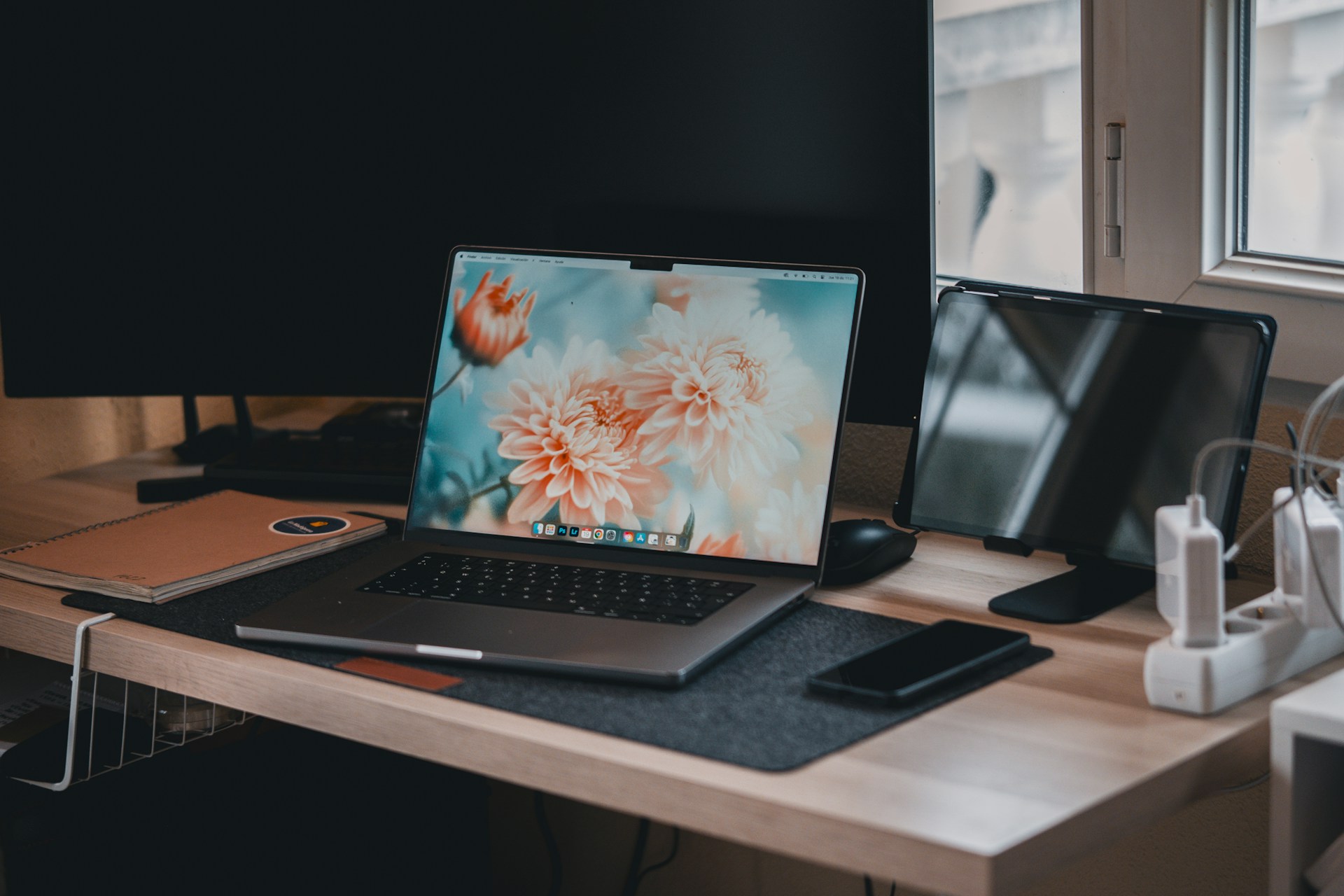
A notebook may belong to the same zone as your keyboard, not because they share a purpose, but because your hand often moves from one to the other. A laptop’s placement might be defined not by symmetry but by an angle that feels visually quiet. Even the grain of wood or the edge of a shelf can create a line that influences how objects settle.
This directional thinking brings a sense of calm that symmetrical setups sometimes miss. The desk becomes less about control and more about coherence.
Lines form a kind of visual gravity
Tools naturally fall into place when the guiding lines remain clear.

Natural Line Working Method – reducing desk tension through alignment
Work often becomes stressful not because of major obstacles but because of tiny disruptions that accumulate. A pen that’s always slightly out of reach, a cable that cuts across your hand’s path, a notebook that disrupts the visual flow — these fractions of friction add weight to the day.
The Natural Line Working Method reduces these micro-interruptions by aligning tools with the routes your hands and eyes repeat countless times. When the desk flows in the same direction your work does, concentration becomes easier.
Even the atmosphere shifts. The workspace stops feeling like a collection of unrelated items. It gains a sense of direction, almost like the quiet current of a river guiding objects downstream.
Clarity grows not from emptiness, but from alignment
You don’t need fewer things. You need things that cooperate with your movement instead of resisting it.
Creating a workspace that adapts across tasks
One advantage of this method is its flexibility. Because the lines are shaped by behaviour rather than design, they adapt as your routines change. A new tool on the desk introduces a new line. A period of heavy writing may shift the central direction. The desk evolves organically without needing major rearrangements.
This makes the method particularly suitable for people whose tasks vary throughout the week. Instead of forcing the desk into one identity, the lines give it a structure that stretches and contracts depending on what you’re doing.
The method becomes a quiet companion rather than a rigid rule. You shape it with your work, and your work shapes it in return.
When tasks change, the lines change with them
No two weeks look the same. The desk adjusts without needing a reset.
Natural Line Working Method – a calmer visual language
Visual noise plays a bigger role in productivity than many realise. A desk filled with hard breaks, abrupt angles and scattered objects sends the mind in too many directions.
The Natural Line Working Method softens that noise. By arranging objects along shared directions, the desk becomes visually smoother. It doesn’t mean everything becomes straight or rigid — the goal is cohesiveness, not precision. Items simply relate to one another through gentle alignment.
This quiet language affects mood. Sitting down at the desk feels easier. The eye finds rest instead of jumping from object to object. The workspace feels cohesive, even if it isn’t perfectly neat.
A desk that asks less of your attention
When the visual field is calmer, your focus has one less barrier to cross.
A method that grows more effective the longer you use it
What makes the Natural Line method different from most organisational ideas is that it rewards time. The more you work, the clearer the lines become. The more clearly you see them, the easier the desk becomes to maintain.
You begin placing objects almost automatically along the pathways that feel natural. The desk stays organised not because you impose order, but because order emerges through movement.
Over months, the workspace gains a quiet personality — neither minimal nor maximal, neither strict nor loose. Just grounded, coherent and responsive.
A desk shaped by natural lines feels less like a container for tools and more like a surface that understands how you work.